There is a reason why Rudrabhishek has survived thousands of years without fading. Not because it is tradition for tradition’s sake but because generation after generation, people have experienced something real from it. Healing. Relief. A quiet sense that something shifted. That is not easy to explain, and the Shivmahapuran does not try to explain it rationally either. It simply states: Shiva is most pleased by this puja above all others.
So what exactly is Rudrabhishek? Why is it done? And what does the actual process look like?
Let us go through all of it properly.
The Meaning of the Word Rudrabhishek
Break the word down and you get two Sanskrit roots.
Rudra is one of Shiva’s oldest names it appears in the Rigveda, in hymns that are among the earliest religious texts human beings have ever written. Rudra is not the gentle, meditative Shiva of popular imagery. Rudra is fierce. He is the storm. He is the one who destroys what is rotten so that something clean can take its place. The Shri Rudram, which forms the backbone of this entire puja, is a Vedic hymn addressed entirely to this form.
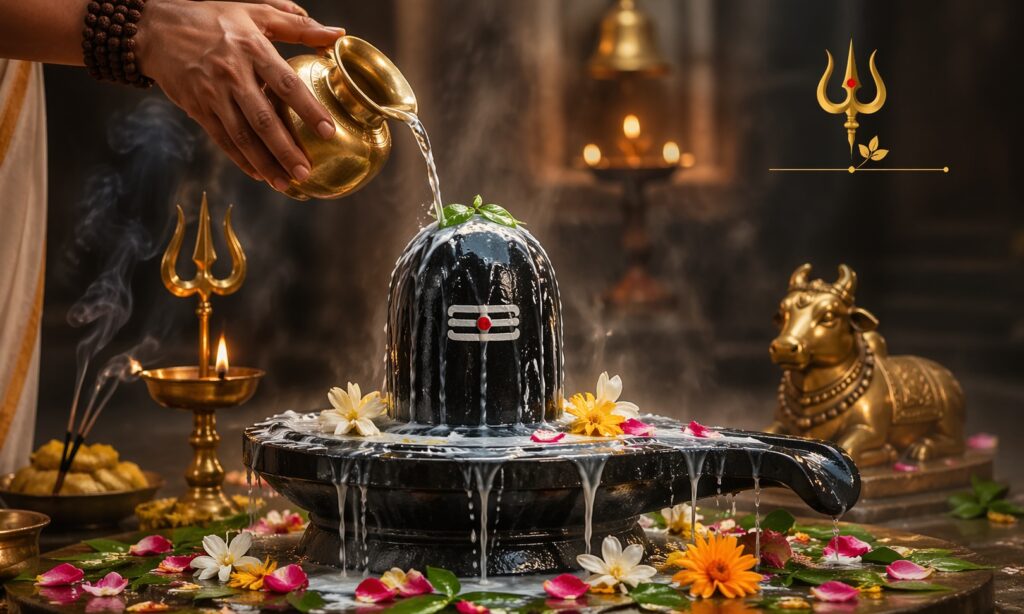
Abhishek simply means bathing a deity pouring sacred substances over the idol or Shivalinga as an act of worship.
Put them together and Rudrabhishek is the sacred bathing of Lord Rudra-Shiva, performed with the Vedic mantras of the Shri Rudram.
That is the simple definition. But what the Shivmahapuran says about it goes much further. In the Vidyeshwar Samhita, it is stated that the spiritual merit of one Rudrabhishek equals the merit of donating a thousand cows, or completing the pilgrimage of all four dhams. That is not a small claim.
Why This Puja Exists the Story from the Shivmahapuran
When the rishis gathered at Naimisharanya asked Suta Goswami a very practical question how does an ordinary person in Kaliyuga actually reach Shiva, without years of tapasya or elaborate yajnas the answer given was Rudrabhishek.
Not because it is easy. But because it is complete.
The Shivmahapuran also carries a deeper story about the origin of Shivalinga worship itself. When Lord Brahma and Lord Vishnu argued over who was supreme, Shiva appeared before them as an infinite pillar of light a Jyotirlinga with no beginning and no end. Both gods were humbled. And in their worship of that pillar of light, they performed the first Abhishek.
This is why Shivalinga Abhishek is not considered a human invention. According to the Puran, Brahma and Vishnu themselves did it first.
The Shri Rudram Without This, There Is No Rudrabhishek
A lot of people confuse Rudrabhishek with a simple water-pouring ceremony. It is much more than that.
The Shri Rudram is a two-part hymn from the Krishna Yajurveda specifically the Taittiriya Samhita. It is one of the most ancient continuously recited texts on earth. Pandits trained in this recitation spend years getting it right. The pronunciation, the svara (tonal accent), the rhythm all of it matters.
The first part, the Namakam, begins with “Namaste Rudra Manyave.” It addresses Shiva in over a hundred different forms as the lord of the forests, the healer of diseases, the protector of travellers, the one who lives in the marketplace and the cremation ground both. Every aspect of existence falls under Rudra’s watch, and the Namakam acknowledges each one.
The second part, the Chamakam, is a list of requests. All 344 of them. Health, wealth, children, wisdom, long life, good harvest, strong cattle, victory over enemies, and ultimately moksha. It is remarkably human in its scope. The ancient rishis were not shy about asking for everything.
When the Shri Rudram is chanted eleven times during the Abhishek, the puja becomes an Ekadasha Rudrabhishek significantly more powerful. A hundred and twenty-one times is the Laghu Rudra. These are not just numbers. Each repetition deepens the vibration and the merit.
The Rudrabhishek Vidhi: What Actually Happens During the Puja
Sankalpa
Everything begins here. The pandit pronounces your name, your gotra, and the specific intention behind this puja whether it is for health, for the peace of an ancestor, for removing a dosha, or simply as an act of devotion. This is what makes Rudrabhishek yours. Without the Sankalpa, the puja has no address.
Ganapati Puja
No Vedic ritual begins without first honouring Lord Ganesha. This is not formality the tradition holds that Ganesha’s blessing removes the obstacles that might interrupt the puja or dilute its effect.
Kalash Sthapana
A copper or brass pot filled with Gangajal is established. The Kalash represents all the sacred rivers and tirthas of Bharat together in one vessel. The water used for Abhishek comes from this pot.
Panchamrit Abhishek
The Shivalinga is bathed in five sacred substances milk, curd, honey, ghee, and sugar while the Shri Rudram is chanted. Each ingredient carries meaning. Milk for purity. Curd for prosperity. Honey to remove the bitterness in one’s circumstances. Ghee for strength and vitality. Sugar for sweetness in relationships, in daily life, in the mind itself.
Abhishek with Sacred Waters
Gangajal, rose water, sandalwood water, coconut water. At temples like Kashi Vishwanath, this process is done with exceptional care. The Shivmahapuran says that Gangajal used in Abhishek at Kashi carries the combined merit of all tirthas.
Bilva Patra Offering
Bel leaves Bilva is offered throughout the Abhishek. The Shivmahapuran dedicates considerable space to the importance of Bilva in Shiva worship, stating that a single Bilva leaf offered with sincere devotion gives more punya than donating gold. The leaf’s three lobes represent the three eyes of Shiva, the three gunas, and the trinity of Brahma, Vishnu, and Mahesh.
Shri Rudram Recitation
This is the core of the puja. The pandit chants the complete Namakam and Chamakam while the Abhishek continues. The sound fills the space. If you have ever sat in a room where Shri Rudram is being properly chanted, you will understand why people have been doing this for three thousand years.
Aarti and Pushpanjali
The puja closes with the Shiva Aarti and the offering of flowers at the lord’s feet. Vibhuti sacred ash and prasad are then distributed.
When to Perform Rudrabhishek – The Most Auspicious Times
Shravan Maas is the most important period. The Shivmahapuran is explicit Shiva is more easily propitiated during Sawan than at any other time of year. A Rudrabhishek on any Sawan Monday carries exceptional merit.
Mahashivratri stands apart from everything else. The puja performed across all four prahars of Mahashivratri night is said, in the Shivmahapuran, to grant liberation from the cycle of birth and death. This is not stated lightly.
Pradosh Vrat the thirteenth lunar day at dusk is another powerful time, described in the Skanda Puran as Shiva’s own preferred hour for worship.
That said, the Shivmahapuran also makes clear that no auspicious tithi is required for a devotee whose heart is genuinely turned toward Shiva. Devotion overrides all timing.
What Are the Benefits? What Does the Shivmahapuran Actually Say?
Let us be precise about this rather than vague.
The Vidyeshwar Samhita states that Rudrabhishek removes Pitru Dosha the karmic disturbances caused by unfulfilled duties toward ancestors. This is one reason families perform this puja specifically during Pitru Paksha or after a death in the family.
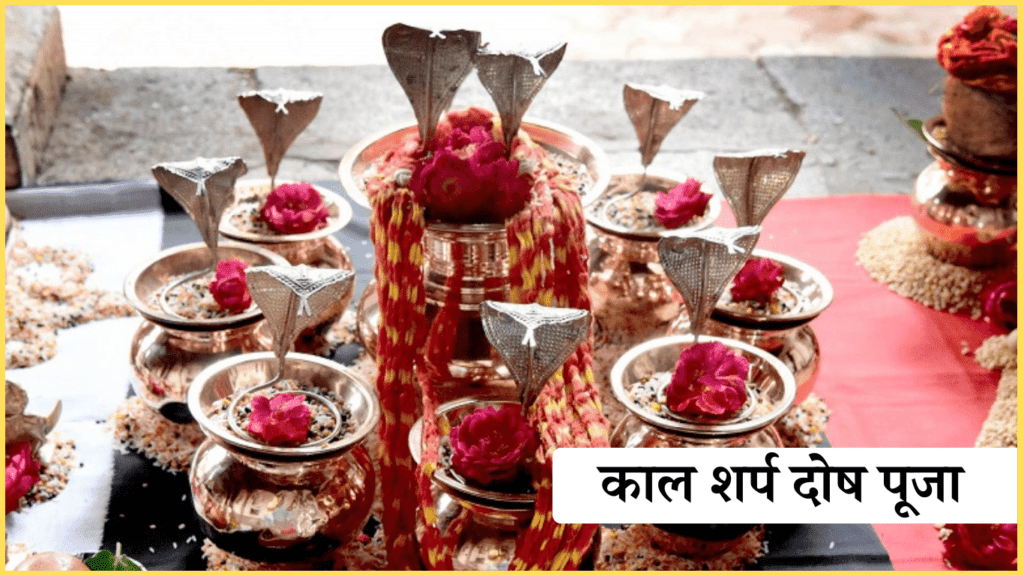
Kaal Sarp Dosha and malefic planetary placements are also addressed through Rudrabhishek this comes from the tradition of using the Mahamrityunjaya Mantra as a graha shanti remedy.
The Chamakam’s 344 requests cover the full range of life health, financial stability, harmony in the home, children, long life. The tradition holds that when these verses are chanted with Abhishek, they are not merely words being spoken they are specific intentions being placed before the divine.
For moksha the Shivmahapuran says that a devotee who performs Rudrabhishek with understanding and dedicates the merit to all beings gradually purifies the antahkaran (inner instrument) and moves toward liberation. Not in one puja, but through sustained practice.
Who Should Perform Rudrabhishek?
Shiva himself says in the Shivmahapuran that he makes no distinction among his devotees. Rudrabhishek is open to everyone.
It is specifically recommended when there is serious illness in the family, persistent financial difficulty despite sincere effort, Kaal Sarp or Pitru Dosha in the horoscope, a recent death requiring pitru shanti, or simply as an ongoing practice of devotion.
For those living outside India whether in the US, UK, Canada, Australia, or the Gulf the tradition fully supports having the puja performed on your behalf at a major temple. The Sankalpa is taken in your name. The merit reaches you. Physical presence has never been a requirement in the Vedic tradition for receiving the fruits of a properly performed puja.
Book Rudrabhishek at Kashi Vishwanath or Kedarnath Through Vedaangam
Vedaangam performs authentic Rudrabhishek at Kashi Vishwanath temple in Varanasi and at Kedarnath two of the twelve Jyotirlingas, and among the most powerful Shiva shrines in India. The puja is performed by trained, experienced pandits. The Sankalpa is taken in your name and gotra. You receive a live video of the complete puja, and prasad is dispatched to your home.
Visit vedaangam.com or contact us on WhatsApp to book or to ask which puja is right for your specific situation.
People Also Ask FAQ
What is the difference between Rudrabhishek and regular Shiva Abhishek?
Regular Shiva Abhishek is a general offering to the Shivalinga with water or milk. Rudrabhishek specifically involves the complete recitation of the Shri Rudram the Namakam and Chamakam from the Krishna Yajurveda during the Abhishek. This Vedic recitation is what makes it Rudrabhishek and elevates it well above a standard Abhishek in terms of scriptural merit and spiritual effect.
Can Rudrabhishek be performed on behalf of someone who has passed away?
Yes. Rudrabhishek for the peace of a departed soul pitru shanti is a recognised and well-established practice. The Sankalpa is taken in the name of the deceased, and the puja’s merit is directed toward their liberation.
How many times should Rudrabhishek be performed?
There is no fixed number. Many families perform it once a year typically on Mahashivratri or during Sawan. Others have it performed monthly on Pradosh or every Sawan Monday. The Shivmahapuran places greater importance on sincerity than on frequency.
Is there any restriction on women performing or booking Rudrabhishek?
No. The Shivmahapuran carries no such restriction. Shiva’s worship has historically been among the most inclusive in the Hindu tradition. Women can and do have Rudrabhishek performed on their behalf.
Watch Now: मासिक शिवरात्रि और प्रदोष व्रत का रहस्य – Shivratri Vrat Benefits
What is Ekadasha Rudrabhishek?
It is the performance of Rudrabhishek with eleven complete recitations of the Shri Rudram Namakam and Chamakam rather than one. The word Ekadasha means eleven. This is a longer, more elaborate puja that takes three to four hours and carries proportionally greater merit according to the tradition.